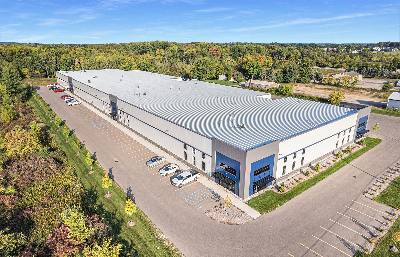
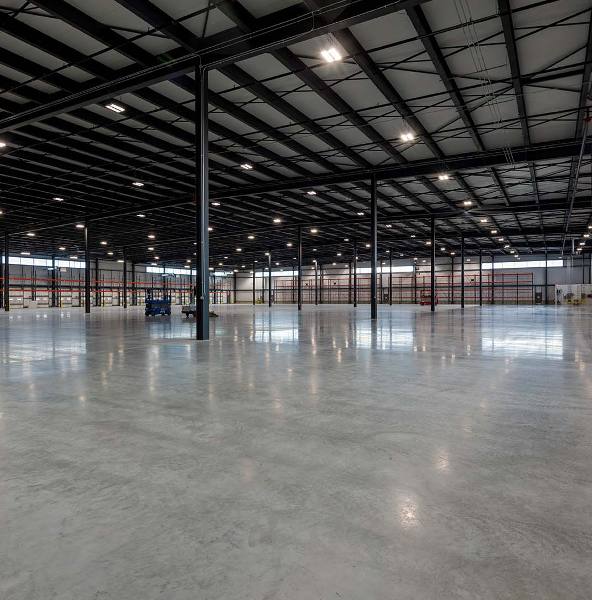
Mission critical facilities demand continuous reliability and uptime. FALK insulated metal panels support faster delivery and more stable operating environments, ideal as AI and cloud computing drive rapid growth in hyperscale data centers.
Faster construction and faster time to operation
Reduced energy use
Long-term reliability at scale
Dedicated support from design through installation
Built for 24/7 Performance
Mission-critical environments demand continuous operational reliability. FALK insulated metal panels help create more durable, thermally efficient building envelopes engineered for stable interior conditions and long-term performance.
Consistent thermal control
Airtight building envelope performance
Reduced thermal bridging
Moisture and condensation control
Durable systems engineered for long lifecycle performance
Faster Installation. Earlier Operation.
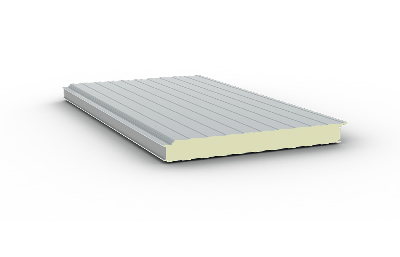
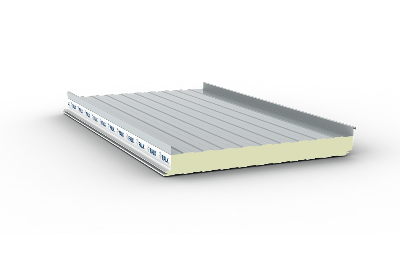
Speed to deployment matters in hyperscale, AI, or other mission-critical projects, as delays impact revenue and available capacity. FALK enables faster time to operation of critical infrastructure and faster time to operation through prefabricated panel systems. Our IMPs simplify construction and accelerate enclosure timelines.
Faster dry-in schedules
Simplified installation process
Reduced trades coordination
Factory-controlled manufacturing quality
Earlier commissioning and operational readiness
Panel lengths up to 82 feet to reduce joints and speed installation
Controlled Environments You Can Rely On
Cooling efficiency and environmental stability are critical for mission critical operations, especially as with high-density compute environments increase heat loads and energy demands. FALK's insulated metal panels support controlled environments with consistent internal conditions and efficient cooling strategies.
High thermal insulation (PIR core)
Airtight building envelopes
Reduced thermal bridging
Increased energy efficiency
Simplified Building Envelope Construction
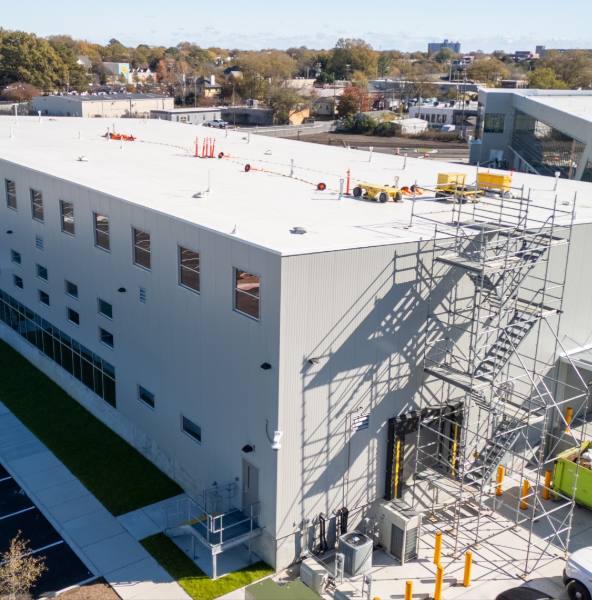
Traditional wall assemblies require multiple components and trades, increasing complexity and risk. By combining elements like insulation, air & vapor control, and interior/exterior finishes into a single system with FALK’s insulated metal panels, construction is simplified and reliability is improved.
Integrated wall systems
Fewer envelope interferences
Streamlined detailing
Consistent system performance
Long-Term Reliability at Scale
Mission critical buildings operate continuously and often operate at scale, making performance consistency across projects essential. FALK’s insulated metal panels provide durable, high-performance building envelopes that have reduced maintenance requirements and are consistently high quality. As a tested and proven system, FALK's IMPs supports long-term performance, lower lifecycle costs, and reliable outcomes across multiple facilities.
FM Approved IMPs
Certified Performance Ratings
Tested for Multiple Standards: Fire, Structural, Thermal, Air, Water, and more
FALK's range of panels is rigorously tested by independent third-party labs to ensure they meet building code standards and hold up under various product approval listings. These panels are assessed by organizations such as Factory Mutual, QAI, Intertek, and Encon, among others, to fulfill a range of requirements from ASTM, NFPA, ANSI, UL & ULC, FM, and the Florida Building Code, to name a few. For the latest test results, check out FALK's website.
How effective are insulated metal panels as insulators?
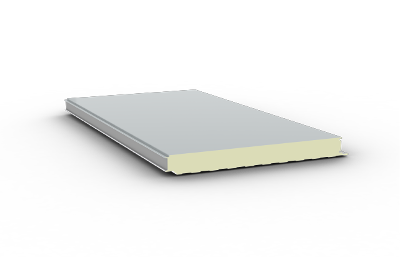
Insulated metal panels are excellent insulating products that seamlessly interlock. With these steel insulated metal panels, you can construct a highly insulated shell for your building's roof or exterior. However, the overall insulation depends on more than just the insulated metal panel; it involves the complete construction finish. The areas where the roof meets the facade, ridge details, the underside of the insulated metal panels, along with window and door frames, are critical points. For achieving an airtight—and consequently, well-insulated—structure, FALK's website offers numerous detailed solutions.
What is the expected lifespan of an insulated metal panel?
The durability of any construction material, including insulated metal panels, heavily relies on various factors. These include the quality of the materials, the assembly process, and the environmental conditions where the panels are utilized. Based on building regulations, structures are expected to have a minimum lifespan of 50 years, and insulated metal panels are designed to meet or surpass this requirement.
Are FALK insulated metal panels available with FM Certification?
FM Global, a leading industrial property insurer, conducts thorough testing to ensure products meet specific standards. FALK has had numerous insulated metal panels tested to secure the appropriate FM certification. You can view the certifications here.
Why use insulated metal panels Instead of drywall?
IMPs are chosen over drywall partitions for several reasons, particularly in the context of energy efficiency. They deliver substantial cost savings thanks to their insulating foam core and superior thermal properties. They are also more efficient in terms of installation and energy use compared to conventional light gauge framed wall systems.
The Polyisocyanurate foam and cumulative materials used by FALK boasts an R-Value, a measure of thermal resistance, averaging 8.33 per inch. This figure comes from independent testing conducted by third-party laboratories. For more information see our Testing & Certifications page or contact our Customer Service.



 United Kingdom
 Français
 Nederland
 Ireland
 US
US
 Deutschland
 Canada